
DOI: https://doi.org/10.34069/AI/2026.87.01.4
Volume 15 - Issue 87: 38-47 / January-june, 2026
How to Cite:
Madrigal Redondo, G., Sandí Flores, J., Carranza Varela, M., & Carazo Berrocal, G. (2026). Phytochemical profile and physicochemical characterization of the endemic vine Tynanthus croatianus (Bignoniaceae) in Costa Rica.
Amazonia Investiga, 15(87), 38-47. https://doi.org/10.34069/AI/2026.87.01.4
Phytochemical profile and physicochemical characterization of the endemic vine Tynanthus croatianus (Bignoniaceae) in Costa Rica
Perfil fitoquímico y caracterización fisicoquímica de la planta trepadora endémica Tynanthus croatianus (Bignoniaceae) en Costa Rica
Received: December 9, 2025 Accepted: February 26, 2026
Written by:
German Madrigal Redondo
https://orcid.org/0000-0002-9856-4044
Master’s degree in Quality Control of Medicines and Master’s degree in Intellectual Property, Pharmaceutical Research Institute (INIFAR), Pharmacy School, University of Costa Rica, San José, Costa Rica. Email: generacionlcr96@gmail.com
Jeniffer Sandí Flores
https://orcid.org/0009-0009-4495-9671
Bachelor´s degree in Pharmacy, Pharmaceutical Research Institute (INIFAR), Pharmacy School, University of Costa Rica, San José, Costa Rica. Corresponding author. Email: jeniffer.sandi@ucr.ac.cr
Maynor Carranza Varela
https://orcid.org/0009-0001-8861-6322
Master's Degree in Natural Resource Management and Production Technologies, Pharmaceutical Research Institute (INIFAR), Pharmacy School, University of Costa Rica, San José, Costa Rica. Email: maynor.carranza.varela@una.cr
Gustavo Carazo Berrocal
https://orcid.org/0000-0002-1778-5559
Master's degree in Analysis and Quality Control of Medicines, Pharmaceutical Research Institute (INIFAR), Pharmacy School, University of Costa Rica, San José, Costa Rica. Email: gustavo.carazo@ucr.ac.cr
Abstract
Traditional medicine utilizes species of the Bignoniaceae family to treat diabetes, malaria, and leishmaniasis. However, Tynanthus croatianus, an endemic vine from Costa Rica, lacks comprehensive phytochemical studies validating its potential therapeutic use. Objective: This study aimed to characterize the secondary metabolites in T. croatianus stems using solvents of varying polarity and to determine the physicochemical properties of the aqueous extract. Methods: Stem samples were collected in Puntarenas, Costa Rica. Extracts were prepared via maceration using distilled water, ethanol (96%), methanol, and chloroform. Qualitative phytochemical screening (Dragendorff, Shinoda, etc.) and physicochemical analyses (pH, specific gravity, UV-Vis spectroscopy) were performed. Results: Phytochemical screening revealed the presence of flavonoids, terpenes, gallic tannins, catechins, and steroids across all extracts. Notably, alkaloids were detected in ethanolic and methanolic phases but were absent in aqueous extracts. The aqueous solution exhibited an acidic pH (5.61) and a specific gravity of 0.9977. UV-Vis analysis indicated the presence of low-molecular-weight compounds, likely sugars and terpenes. Conclusion: T. croatianus possesses a diverse metabolic profile rich in antioxidant and antimicrobial candidates. These findings provide a scientific baseline supporting its ethnopharmacological potential and justifying future in vitro and in vivo bioactivity assays.
Keywords: T. croatianus, phytochemical profile, secondary metabolites, extracts, therapeutic potential.
Resumen
La medicina tradicional utiliza especies de la familia Bignoniaceae para tratar la diabetes, la malaria y la leishmaniasis. Sin embargo, Tynanthus croatianus, una planta trepadora endémica de Costa Rica, carece de estudios fitoquímicos exhaustivos que respalden su potencial uso terapéutico. Objetivo: Caracterizar los metabolitos secundarios en los tallos de T. croatianus mediante solventes de polaridad variable y determinar las propiedades fisicoquímicas del extracto acuoso. Métodos: Se recolectaron muestras de tallos en Puntarenas, Costa Rica. Los extractos se prepararon mediante maceración con agua destilada, etanol (96%), metanol y cloroformo. Se realizó un cribado fitoquímico cualitativo (Dragendorff, Shinoda, etc.) y análisis fisicoquímicos (pH, gravedad específica, espectroscopía UV-Vis). Resultados: El cribado fitoquímico reveló la presencia de flavonoides, terpenos, taninos gálicos, catequinas y esteroides en todos los extractos. Cabe destacar que se detectaron alcaloides en las fases etanólica y metanólica, pero no en los extractos acuosos. La solución acuosa presentó un pH ácido (5,61) y una densidad de 0,9977. El análisis UV-Vis sugirió la presencia de compuestos de bajo peso molecular, probablemente azúcares y terpenos. Conclusión: T. croatianus posee un perfil metabólico diverso, con un rico contenido de candidatos antioxidantes y antimicrobianos. Estos hallazgos proporcionan una base científica que respalda su potencial etnofarmacológico y justifica futuros ensayos de bioactividad in vitro e in vivo.
Palabras clave: T. croatianus, perfil fitoquímico, metabolitos secundarios, extractos, potencial terapéutico.
Introduction
Traditional medicine, or ethnobotany, has been used to treat diseases since ancient times and has shown clear benefits for communities that continue to preserve and use medicinal plants (Zambrano Intriago et al., 2015). Among the important medicinal plants is the Bignoniaceae family, which includes species with active compounds used to treat diseases such as cancer, diabetes, syphilis, malaria, hepatitis, rabies, and even (Gargiullo et al., 2004). Some examples of these species belong to the genus Tynanthus miers, such as Tynanthus guatemalensis, Tynanthus panurensis, Tynanthus micranthus, and Tynanthus croatianus.
The genus Tynanthus miers comprises approximately 15 species (Medeiros & Lohmann, 2015), and is characterized mainly by lianas and some small trees. The small white flowers are a distinctive characteristic of the genus within the family, as is the intense clove aroma present in many of its species, as well as its fruits with wide margins. (Lohmann, 2006; Cortés, 1897).
Tynanthus guatemalensis is one of the most important species, its use in Mayan culture being linked to treating the symptoms of diabetes. According to a study conducted in conjunction with healers from this population, promising results were obtained when using the plant to treat this disease, identifying verbascoside as the main secondary metabolite associated with the plant's significant anti-glycation activity (Ferrier et al., 2018). On the other hand, in Peru, Tynanthus panurensis, known as "clavo huasca," is traditionally used for its aphrodisiac, energizing, and analgesic properties, as well as for the treatment of diabetes and rheumatism. A study identified the presence of phenylpropanoid glycosides, including verbascoside, isoverbascoside, and leucosceptoside, in this plant. These compounds exhibit analgesic, antioxidant, and antimicrobial pharmacological activity (Plaza et al., 2005; Jiménez & Riguera, 1994).
Tynanthus micranthus is used in natural medicine. It is often brewed as a tea to help relieve colds. The clove-flavored species has been studied for its eugenol content a compound used as an analgesic and disinfectant. Researchers were able to extract this compound and evaluate its antimicrobial activity against fungi, bacteria, and yeasts (Custódio et al., 2010).
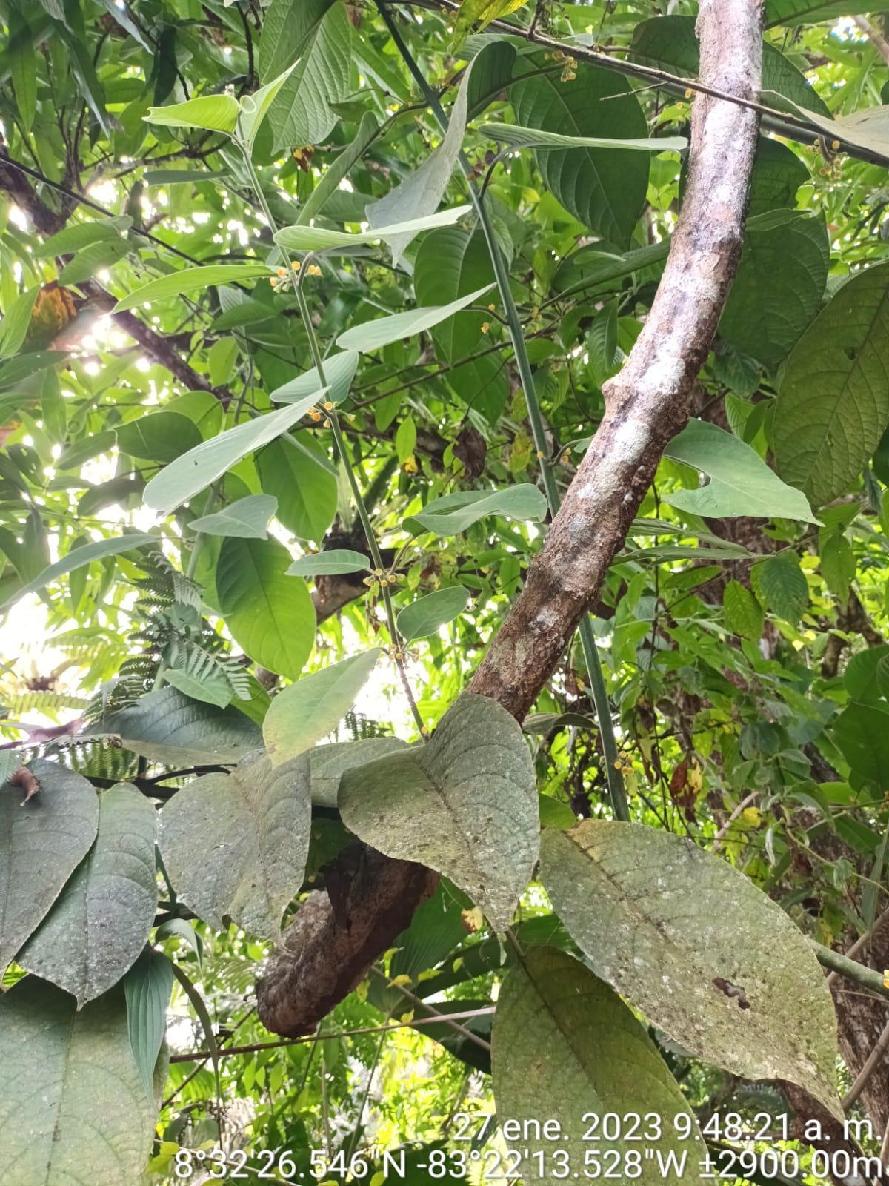
In Costa Rica, the species Tynanthus croatianus (Figure 1) is found in the La Amistad Pacífico Conservation Area, Puntarenas province. It is characterized as a liana whose fruit is capsule-shaped and grows in limestone-derived soils, typically at altitudes below 300 m above sea level. It is worth noting that this species is also found in Panama (Cortés, 1897).
Figure 1. Tynanthus croatianus La Amistad Pacifico Conservation Area in the province of Puntarenas.
Source: Original photograph
Tynanthus croatianus is prized for its medicinal and aphrodisiac properties. Its limited habitat puts it at risk of extinction, making it significant for this article. In Costa Rica, it is called the cinnamon vine or clove vine, but the species remains relatively unknown.
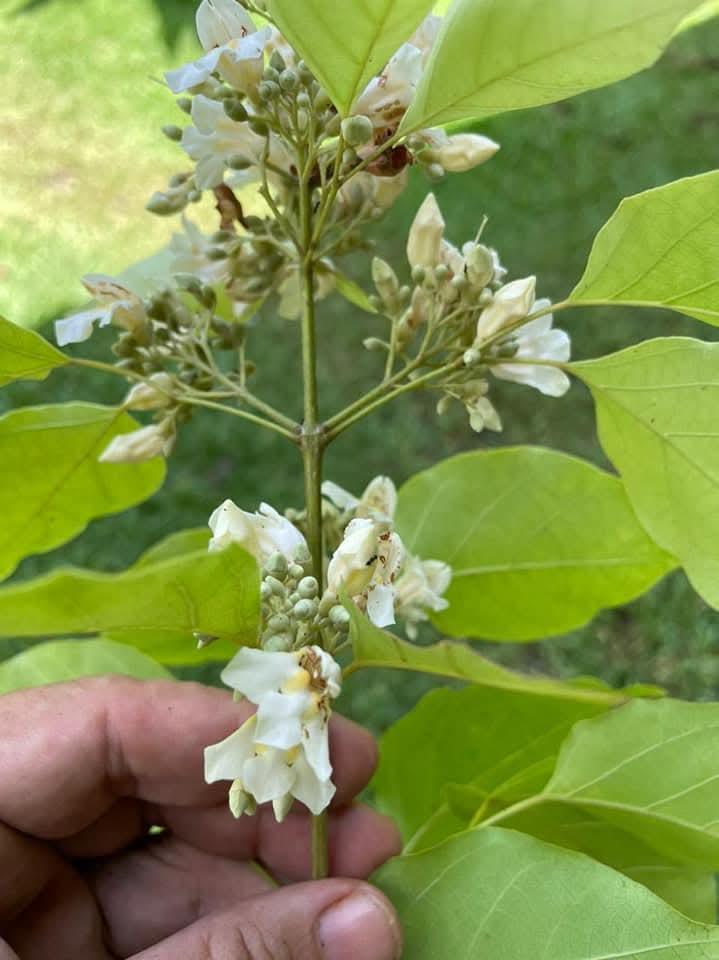
Figure 2. Flowers of Tynanthus croatianus, Gallardo, Los Dos Brazos del Rio Tigre, La Palma de Puerto Jimenez, province of Puntarenas.
Source: Original photograph
Given the limited research on this regionally endemic species, the primary objective of this study is to identify the presence of secondary metabolites in Tynanthus croatianus and assess their potential pharmacological effects.
Materials and methods
The plant Tynanthus croatianus A. H. Gentry was collected between February 2021 and March 2022, directly from the canton of Puerto Jimenez, Gallardo, along the Tigre River riverbed, in the district of La Palma, Puntarenas province, Costa Rica (coordinates: N: 08°32.399, W 083°21.865' and N:08°32.397', W: 083°21.866'). A total of 2 kg of plant material was collected on each date. A test specimen was deposited in the herbarium of the National Museum of Costa Rica and the University of Costa Rica under the card numbers 08 36 39 Lat and 83 21 55 Long.
The following reagents were used for the phytochemical screening: hydrochloric acid 0.01 M and 20% bismuth nitrate Merck (Germany), potassium iodide Merck (Germany), mercuric chloride Sigma-Aldrich (Germany), sublimate iodine Merck (Germany), 1%, 5%, 10% and 2M sodium hydroxide PCC ROKITA (Poland), acetic anhydrous of VWR Chemicals BDH(EE.UU), concentrated sulphuric acid of PQM Fermont (Mexico), ammonium molybdate Chemicals BDH (EE.UU), perchloric acid Merck (Germany), bromine Merck (Germany), glacial acetic acid Fisher Scientific (EE.UU), potassium bromide Sigma-Aldrich (Germany), sodium hypochlorite Merck (Germany), metallic zinc Sigma-Aldrich (Germany), trichloroacetic acid concentrate Sigma-Aldrich (Germany), gelatin, salt, ferric chloride JT BAKER SIGMA (EE.UU), formaldehyde Merck (Germany), ninhydrin Merck (Germany), vanillin, alpha naphthol or beta naphthol Merck (Germany), sodium carbonate Fisher Scientific (EE.UU) , sodium citrate Merck (Germany), cupric sulfate pentahydrate JT BAKER SIGMA (EE.UU), sodium Merck (Germany), potassium Merck (Germany), potassium tartrate JT BAKER SIGMA (EE.UU), silver nitrate SPECTRUM (EE.UU), ammonium hydroxide concentrate Fisher Scientific (EE.UU), hydroxylamine 2% Merck (Germany), Sudan III Merck (Germany), picric acidand ammonium trichloride Merck (Germany).
The following were used as control reagents for the phytochemical profile: quinine, Sigma-Aldrich (Germany); naphthoquinone, Merck (Germany); cholesterol; orange peel; strawberry or blackberry extract; tannins; aloe; hydrolyzed collagen; glucose; aerial parts of Montanoa hibiscifolia, oil; and seeds of Passiflora denopoa, annatto.
The equipment used for the physicochemical tests was: Hanna® pH meter (HI5522-01) (Poland), Kimble® pycnometer (Mexico), and Thermo Electron Corporation Model 334610 refractometer (EE.UU.).
For the phytochemical profile, the stem of Thynanthus croatianus was first cut on a wooden board with a sharp knife. It was then placed in a laboratory blade mill to reduce its size and facilitate dispersion. Five to ten grams of this plant material were weighed into a glass container using a macrobalance, and solvent was added in a ratio of 1part Thynanthus croatianus to 2 parts solvent (1:2). The solvents used were distilled water, 96% ethanol (Merck, Germany), 99.8% methanol, and 99.8% chloroform. The mixture was stirred in the glass container, allowed to macerate for 7 days, and finally filtered through a cloth filter. The total amount of extract obtained was weighed on a macrobalance, the container was sealed and labeled, and the extract was finally stored in a freezer (aqueous at -20 °C and other solvents at 5 °C) during testing.
Subsequently, the following tests were performed to identify metabolites from the liquid and dry extract stored in the previous phase, according to laboratory procedures: Dragendorff (alkaloids), Mayer (alkaloids), Wagner (alkaloids), Tollens (carbohydrates), Molish (carbohydrates), Fehling (reducing carbohydrates), Benedict (reducing carbohydrates), Shinoda (flavonoids), Pews (flavonoids), Carr-Price (carotenes), Perchloric acid (terpenes), Ammonium molybdate IV (terpenes), Tortelli-Jaffe (terpenes), Sudan (fats), Kedde (cardiotonic glycosides), Guignard (cyanogenic glycosides), Cooling (mucilages), Rosenthaler (saponins), Foam (saponins), Bornträger-Kraus (quinones), Nihydrin (amino acids), Hydrochloric acid-formaldehyde (condensed tannins), Salkowski (terpenes), Gelatin-Salt (tannins), Ferric Chloride III (gallic acid and catechin tannins), Lieberman-Burchard (steroids), Rosenheim (anthocyanins), ferric hydroxamate (sesquiterpene lactones).
Physico-chemical analysis
Specific gravity: The measurement was carried out in triplicate using a Kimble® pycnometer (Mexico) and a RADWAG® Model AS 220 X2 analytical balance (Poland). The mass of the empty pycnometer (clean, dry, and with the lid on) and the mass of the sample (dry and with the lid on) were determined on the same analytical balance. The mass of the sample was then determined by difference, and the same procedure was repeated with distilled water. The data were averaged, and the relative standard deviation (RSD) was calculated. The calculation of the specific gravity was carried out using the following equation:
𝐷𝑅 = ρ 𝑠𝑢𝑠𝑡𝑎𝑛𝑐e /ρ 𝑟𝑒𝑓𝑒𝑟𝑒𝑛𝑐e (equation 1)
pH: The measurement was carried out in triplicate with the aid of a Hanna Instruments pH meter (HI5522-01) (Poland). An aliquot of about 20 mL of the sample was transferred to a 50 mL beaker, and the electrode was properly washed and dried, avoiding contact with the beaker walls. The pH values indicated on the pH meter were recorded after the measurement stabilized. The data were averaged, and the relative standard deviation (RSD) was calculated.
Conductivity: The measurement was carried out in triplicate using a Hanna Instruments pH meter (HI5522-01) (Poland). The pH measurement procedure was repeated, switching the pH meter to conductivity mode. The data were averaged, and the relative standard deviation (RSD) was calculated.
Brix degrees: The measurement was carried out in triplicate with a Thermo Electron Corporation Model 334610 refractometer (EE.UU.). A dropper was loaded with a small amount of sample, the prism cover was removed, and two to four drops of sample were placed in the prism. The sample was checked for distribution, and the prism cover was placed on the prism. The sample was then focused, and the Brix degrees were determined using the refractometer scale. The data were averaged, and the relative standard deviation (RSD) was calculated.
UV-Visible Spectroscopy
Equipment: Thermo Scientific Orion AquaMate 8000 UV-Visible Spectrophotometer (UV-Vis).
An aqueous extract of T. croatianus stems was prepared at 10% w/w in the same manner as described in this section. 5 mL of the filtered extract was placed in a 1 cm x 1 cm quartz cell, and a scan was performed from 200 nm to 700 nm at 5 nm intervals. The data were graphed in Microsoft Excel.
Results
Phytochemical profile
The phytochemical profile of the plant sample in different solvents is presented in Table 1 below. In general, the results showed a remarkable difference between the solvents used.
Table 1.
Phytochemical analysis of aqueous, ethanolic, methanolic, and chloroformic extracts using Tynanthus croatianus stem. Nomenclature: (NA) Not applicable, (-) Negative test, (+) Positive test.